
Training and skills development
If the organization identifies competence gaps, it must take suitable action where applicable. Training is one option. Mentoring, reassignment, hiring, or contracting competent people can also be valid actions.
Training Plans
Training plans help your organization plan, carry out, and evaluate actions to build necessary competence.
Training plans serve as a systematic and structured method for planning, implementing, and following up on employee training activities.
When creating a learning plan, you should include the following information:
- Training: Describe the type of training that is planned, including the purpose, goals, and content.
- Responsible manager: Specify who organizes and implements the training.
- Resources: Specify what resources are needed to complete the training, such as training materials, space, and equipment.
- People to train: Based on their existing skills and training needs, choose which employees will participate in the training.
- Deadline: Specify a date for when the training is to be completed.
- Status: Indicate the status of the training, such as planned, in progress, or completed.
- Log completed: After completing the training, record the date and any comments on how the training went.
- Evaluation: Describe how the effectiveness of the training will be evaluated, for example, by measuring changes in skill levels or job performance.
- Evaluation Date: Enter a date for when the evaluation was conducted.
- Comments: Add additional comments about the training and its implementation.
- Performance evaluation: After completing the review, record the results and any actions that need to be taken to improve future training efforts.
By using training plans, you can manage skills development in a structured way. This will help your organization meet the requirements of ISO standards and continuously improve its performance.
Staff appraisals
Staff appraisals are not a named ISO requirement, but they can be a practical way to follow up competence, working conditions, goals, and support needs.
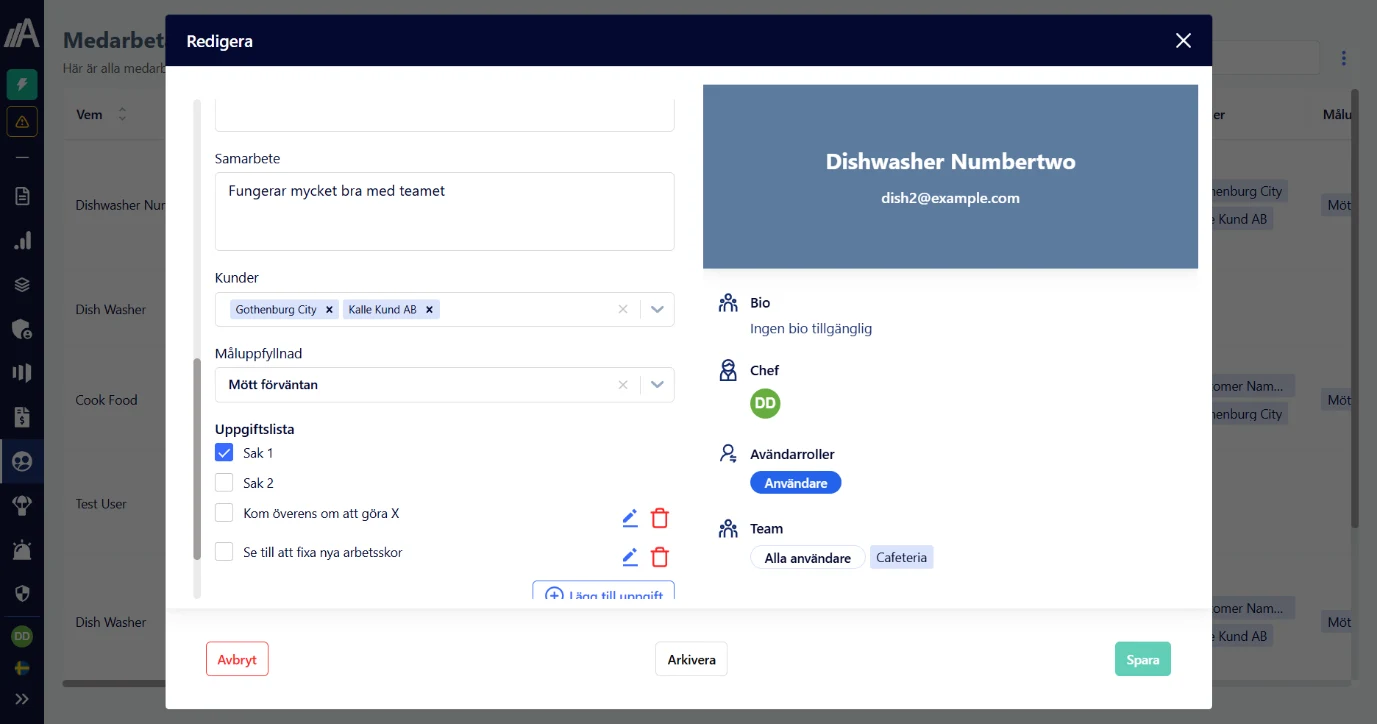
A staff appraisal aims to create an open dialogue between employer and employee, allowing them to discuss their work situation undisturbed.
It’s a platform for both parties to discuss employee performance, both positive and negative. When we talk about performance, we need to look at the whole work situation. Evaluating the work environment, what supports the employee’s needs, skills development, and the employee’s motivation are all components that directly or indirectly contribute to performance.
A staff appraisal also lets the employer show that the employee matters and that good work is noticed.
It is important for employees to actively participate in appraisals, as they provide opportunities to receive valuable feedback and support.
Appraisals should not be one-way communication. It should discuss issues affecting the company and discuss personal goals and action plans to achieve them, at least as necessary.
The appraisals give the employer essential feedback while allowing employees to ask questions and obtain support.
An appraisal begins with the employer and employee discussing goals and the employee’s and the company’s responsibility for achieving them. It can also include discussing the challenges that the employee is facing and strategies for dealing with them.
The employer should also ask questions about employees’ personal goals and help achieve them.
An agreement between the union and the employers’ organization often states how often staff appraisals and salary reviews should be conducted. The manager or employee can also request a spontaneous appraisal.
A trend to watch is that more and more companies are abandoning annual performance reviews. One common reason is that the company thinks it is better to use other, more time-efficient, and cost-effective follow-up methods. The company may also feel that annual performance appraisals do not produce the expected results and that tighter feedback loops provide better results.
Remember that all companies are different, so deciding which review method works best for you and keeping track of what is agreed upon in the area are essential.
Regardless of cadence, making it easy to prepare, conduct, and follow up on appraisals is vital so that they are not seen as a cost that can be cut but as an investment that gives results.
IT tools with built-in access control and the ability to easily view the employee’s competence matrix and other information about the employee with the performance appraisal become extra important.