
Environmental aspects
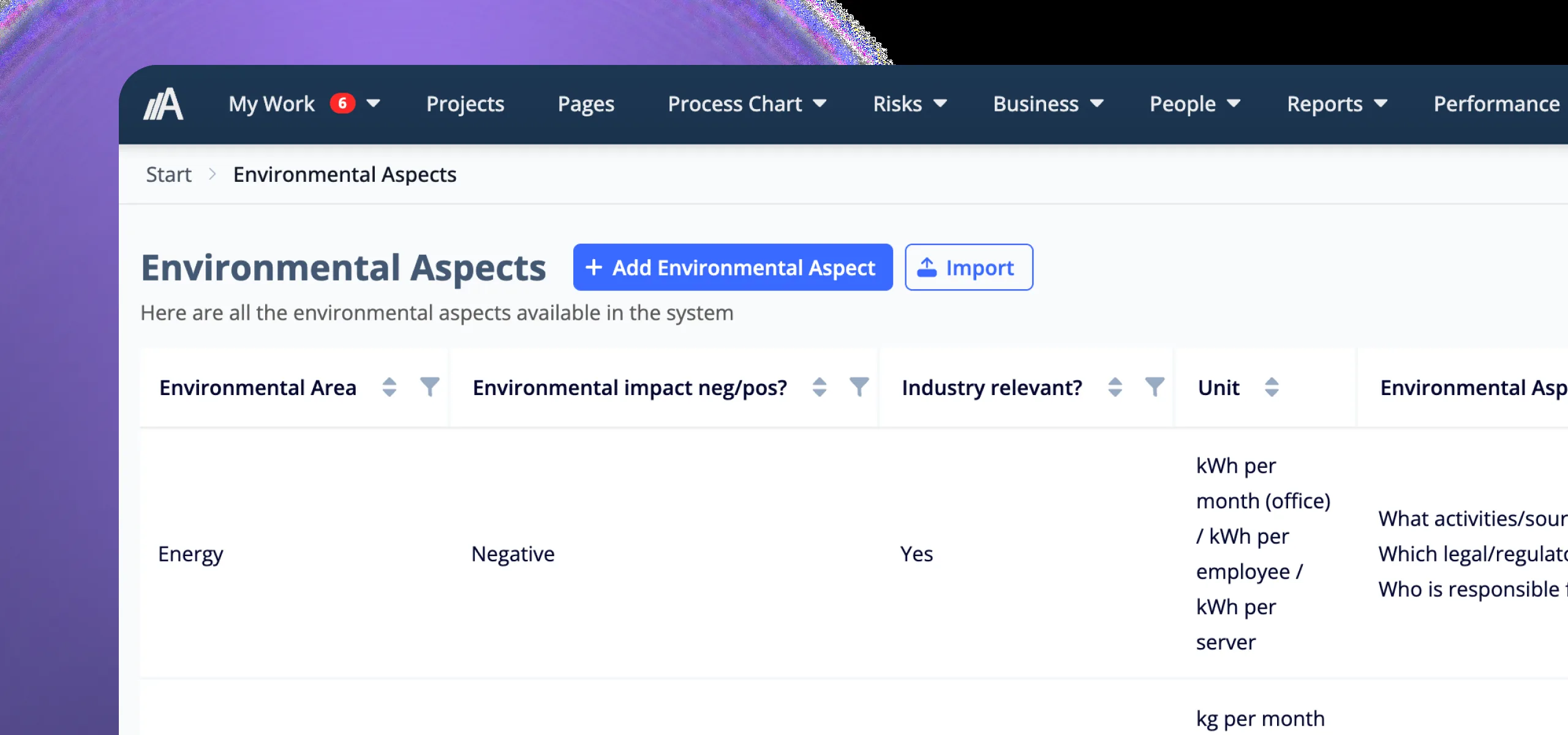
Environmental aspects are a fundamental part of ISO 14001. In this section, we will explore what is required regarding environmental aspects within ISO 14001 and how organizations can implement these principles in their operations.
An environmental aspect is part of an organization’s activities, products, or services that interacts or can interact with the environment. These aspects can have positive and negative environmental impacts. The work should identify significant aspects and the risks and opportunities that follow from them.
Examples of environmental aspects can be:
- Greenhouse gas emissions and air pollution
- Consumption of energy and water
- Waste management and recycling
- Use of hazardous chemicals and materials
- Impact on biodiversity and ecosystems
ISO 14001 requires that organizations implement a systematic process to identify their environmental aspects. This means mapping and analyzing the activities, products, and services within the environmental management system scope that the organization can control or influence, using a life-cycle perspective. The process may include:
- Review of existing documents and procedures
- Interviews with key people within the organization
- Observations of workplaces and processes
- Analysis of data on resource consumption and emissions
After identifying the environmental aspects, the organization must assess their importance using established criteria and prioritize them. This can involve assessing each aspect based on its potential impact on the environment, how much control your organization has over it, and the extent to which legal requirements or other external factors affect its management.
Once the most critical environmental aspects have been identified and prioritized, you must plan actions and controls where needed to address significant environmental aspects, compliance obligations, and risks and opportunities.
This can involve:
-
Changes in processes and technology
-
Training and awareness raising for employees
-
Development of environmental policies and goals
-
Implementation of monitoring and measuring environmental performance
-
Establishment of emergency and contingency plans to deal with any environmental incidents
-
Integrates environmental aspects into the organization’s strategy and decision-making processes
-
Establishes roles and responsibilities for the management of environmental aspects at all levels of the organization
-
Communicates environmental aspects and performance to stakeholders, such as employees, customers, suppliers, and government agencies
-
Conduct internal audits at planned intervals and, when certified, handle external certification audits
But the work doesn’t end here, as you might think. An important principle of ISO 14001 is continuous improvement.
The organization should always strive to improve its environmental performance by:
- Set measurable goals and follow-up routines to evaluate progress
- Conducting regular reviews of environmental aspects and their management
- Identify and implement improvement actions based on results from monitoring, measurement, and audits
- Update and adapt the environmental management system to meet changing conditions, such as new legal requirements, technological innovations, or changing market requirements