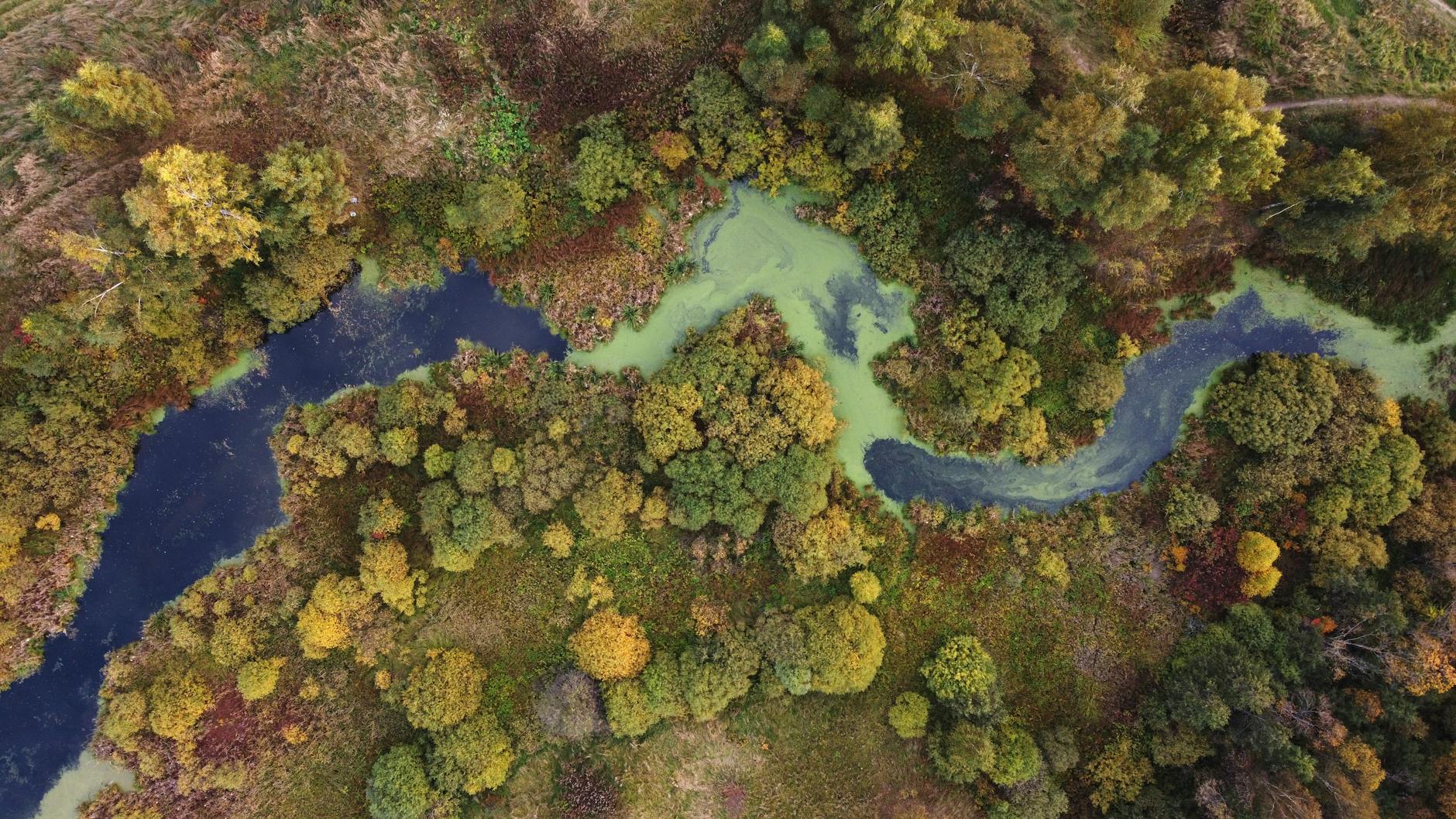
The UN’s science panel on biodiversity warns that up to one million species may be threatened. The EU is tightening biodiversity reporting requirements. And ISO 14001:2026 responds with strengthened guidance on biodiversity and ecosystem protection.
The good news? The core structure and intent of the standard remain unchanged. Organisations already certified to ISO 14001:2015 will find the transition smooth and straightforward. The new elements provide clearer guidance — not dramatic new requirements. This guide shows how to integrate biodiversity best practice into your existing environmental management system.
AmpliFlow Customers: We Guide You Through the Biodiversity Requirements
As an AmpliFlow customer, you do not need to interpret what the strengthened guidance on biodiversity means in practice. We manage the transition for you:
AmpliFlow adapts the tool to the new requirements. The environmental aspects assessment is updated with biodiversity criteria as standard. You get ready-made fields and assessment scales directly in the tool.
Step-by-step instructions within the system. We guide you through exactly what needs to be done — from identifying impact pathways to setting supplier requirements for certified raw materials. The instructions appear where you work.
The tool updates automatically. When ISO 14001:2026 is published, AmpliFlow adapts. The next time you log in, the new functions and guides are in place.
What Is Biodiversity in an ISO 14001 Context?
Biodiversity refers to the variety of life in all its forms — from genetic differences within a species to the full diversity of plants, animals, and micro-organisms across entire ecosystems. ISO 14001:2026 provides strengthened guidance on how organisations can consider their impact on this diversity — something already supported by the standard’s existing framework for environmental aspects.
What is new is not that biodiversity becomes a requirement, but that the guidance becomes clearer. ISO 14001:2015 already addressed emissions, resource consumption, and environmental impact in broad terms. The updated guidance helps organisations think more specifically about impacts on species, habitats, and ecosystem services such as pollination and water purification — but within the same basic structure you already work with.
In practice, biodiversity impact can take many forms. Land use is often the most direct — when you develop natural land for buildings or installations, habitats disappear. Pollution from chemical releases can devastate entire downstream ecosystems. Extraction of timber, fish, or other biological raw materials affects species directly. Climate impact also counts, since carbon emissions alter ecosystems globally. And the spread of invasive species — for instance through imported materials — can displace native species.
Why Focus on Biodiversity Now?
The scientific basis is clear. The UN’s Intergovernmental Science-Policy Platform on Biodiversity and Ecosystem Services (IPBES) warns that up to one million species may face extinction. Ecosystem services we take for granted — pollination, water purification, climate regulation — are degrading. For businesses, this is not abstract: many operations are directly dependent on biological resources, from raw materials to functioning ecosystems.
ISO’s update reflects this reality. The strengthened guidance helps organisations consider how local environmental conditions — such as the effects of climate change, biodiversity loss, and water availability — affect operations. This aligns with the EU Taxonomy, CSRD, and the Kunming-Montreal Global Biodiversity Framework adopted in 2022.
From a business perspective, this is about risk management. Supply chains can be affected by resource scarcity. Reputational risk from links to ecosystem destruction grows as consumers and investors scrutinise more closely. By integrating biodiversity thinking into your existing environmental management system, you position yourself well — both for forthcoming regulation and for stakeholder expectations.
Step 1: Identify Your Organisation’s Impact on Biodiversity
The first step is to map how your operations affect biodiversity — both directly and indirectly. This becomes the foundation for all subsequent work.
Direct Impact Pathways
Start with what you control directly. Land use is often the most obvious factor: are you developing natural land for facilities? Have you altered land types or fragmented habitats so that animals and plants find it harder to move and spread?
Pollution from operations is the next area to review. This goes beyond obvious discharges — chemical releases to water are clear, but air emissions that damage vegetation and light pollution that disrupts animal behaviour also count.
Water use often affects ecosystems far from your site. Are you drawing water from watercourses or groundwater? Have you altered water flows on which animals and plants depend?
Indirect Impact Pathways (Life Cycle Perspective)
This is more complex, but often more important. Upstream in the supply chain is where the greatest biodiversity impact often occurs. How are your raw materials extracted? What farming practices do your suppliers use? Are materials transported through sensitive ecosystems?
Downstream concerns what happens to your products. Do they contain biological materials? Are microplastics released during use? What is the risk of waste entering nature rather than controlled systems?
Step 2: Integrate Biodiversity into Environmental Aspects Assessment
You do not need to build a new system. ISO 14001’s framework for environmental aspects assessment already supports this type of analysis. The strengthened guidance in the 2026 version makes it clearer how biodiversity impact can be considered — but the underlying methodology is the same. You are extending what you already have.
Assessment Criteria for Biodiversity Impact
Your current environmental aspects assessment likely rates probability, severity, and sensitivity. You now add biodiversity-specific criteria on top of this.
For direct impact pathways, you ask three key questions: Is the operation located near protected areas (habitat sensitivity)? Do threatened or red-listed species occur in the area (species presence)? Are critical ecosystem services such as pollination or water purification affected?
For indirect impact pathways, the focus is traceability. Are your biological raw materials certified (FSC for timber, MSC for fish, Rainforest Alliance for agricultural products)? Do raw materials come from countries with high deforestation or biodiversity risk? Can materials be traced back to their source?
How AmpliFlow Helps
[IMAGE: AmpliFlow environmental aspects module showing biodiversity criteria fields and lifecycle perspective options]
In AmpliFlow, you add biodiversity criteria directly to your existing environmental aspects assessment. The system automatically links aspects to life cycle perspectives and relevant objectives — so you do not need to track the connections manually.
Step 3: Formulate an Environmental Policy With Ecosystem Protection
ISO 14001:2026’s strengthened guidance encourages organisations to be more specific about ecosystem protection and natural resource conservation in their environmental policy. This is best practice that strengthens your commitment — and makes the policy more meaningful for both employees and external stakeholders.
Policy Wording
A typical environmental policy under ISO 14001:2015 might read: “We are committed to preventing pollution and reducing our environmental impact.” That is a good foundation, but more specificity is now warranted.
An updated environmental policy for ISO 14001:2026 might instead read: “We are committed to preventing pollution, reducing our environmental impact, and contributing to ecosystem protection through natural resource conservation and biodiversity.”
Concrete Wording for Different Operations
The policy should be relevant to your specific operations. A manufacturing company with biological raw materials might write: “We use certified raw materials (FSC, MSC) to minimise impact on forest ecosystems and marine resources.”
In construction and civil engineering, land use becomes central: “We assess biodiversity impact before land development and implement compensatory measures.”
IT and service companies often have their greatest impact through the supply chain: “We select suppliers with documented commitments to natural resource conservation.”
And for agriculture and food, it is about production methods: “We use farming methods that promote biodiversity.”
Step 4: Setting Biodiversity Objectives and KPIs
Environmental objectives without measurement become wishful thinking. ISO 14001 requires that environmental objectives be measurable where practicable — and biodiversity can actually be measured, albeit differently from emissions. Here are examples of how to make your work concrete.
[IMAGE: AmpliFlow goal management showing biodiversity KPIs with targets and progress tracking]
Examples of Biodiversity Objectives
Land use is often measurable in physical units. The objective might be to create or restore pollinator habitat, with KPIs such as square metres of habitat and number of observed pollinators. Several companies carry out annual surveys — it does not need to be complicated.
Raw materials are most easily measured via certification. The objective of reaching 100% certified biological raw materials gives a clear KPI: percentage of certified raw materials. You can often obtain this directly from your procurement system.
The supply chain requires that you set requirements for suppliers. Measure how many suppliers have undergone a biodiversity assessment — this drives your own work and creates transparency.
Climate impact connects to biodiversity because carbon emissions alter ecosystems. Tonnes of CO₂e per year is an established KPI that you may already be measuring.
Compensation becomes relevant when you cannot avoid impact. Measure the ratio of affected to restored land area to demonstrate that you are balancing your impact.
Step 5: Integrating the Life Cycle Perspective
The life cycle perspective requires you to look beyond your own site. Each phase — from raw material extraction through manufacturing and distribution to product use and waste management — carries its own biodiversity impact.
Raw material extraction involves logging, mining, or fishing — activities with direct impact on species and habitats. Manufacturing concerns land use and emissions from your facilities. Distribution can affect sensitive areas through which transport routes pass. Product use causes problems such as microplastics and chemical releases at the customer’s end. And waste management determines whether materials enter controlled systems or leak into nature.
Practical Example: Textile Company
Consider a textile company working systematically with biodiversity across its entire life cycle.
In raw material extraction, they discover that their cotton is grown in water-stressed regions — an area where water extraction competes with ecosystems. The solution is to switch to organic cotton from areas with better water balance.
In manufacturing, chemical releases from the dyeing process are an issue. By requiring OEKO-TEX-certified chemicals, they reduce the risk of harmful discharges.
Product use turns out to release microplastics with every wash. Here they can inform customers about washing habits and, in the longer term, develop bio-based fibres that break down naturally.
Waste management is the final piece. Textiles in landfill degrade slowly and can leach chemicals. A take-back programme in which customers return worn-out garments closes the loop.
Step 6: Supplier Requirements and Certifications
Many organisations have their greatest biodiversity impact in the supply chain, not in their own operations. Supplier requirements therefore become a critical part of the work.
Supplier Requirements for Biodiversity
Start with basic requirements that apply to all suppliers: compliance with nature protection legislation, no operations in protected areas without authorisation, and a documented biodiversity policy. This is a baseline — suppliers that cannot meet this should not be suppliers.
For high-risk products with biological raw materials, you need to go further. Require certification from recognised schemes, full traceability to origin, and confirmation that the supplier has carried out a biodiversity assessment for its operational areas. Without traceability, you cannot know what you are actually buying.
Certification Schemes
The most important certifications to know are FSC for sustainable forestry (timber and paper), MSC for sustainable fishing, Rainforest Alliance for agricultural products, and RSPO for palm oil free from deforestation. Each certification has its strengths and weaknesses, but together they provide a common standard to require of suppliers.
Frequently Asked Questions
Q: Does the strengthened guidance apply to all industries?
A: Yes, the guidance is general, but how you apply it depends on the nature and impact of your operations.
Q: How do we measure biodiversity impact quantitatively?
A: Percentage of certified raw materials, affected land area, carbon footprint.
Q: Is our existing environmental management system sufficient?
A: Yes, the core structure is unchanged. You extend your existing environmental aspects assessment with biodiversity criteria — no restart is required.
Q: Do we need to carry out field surveys of species?
A: Not generally. Use public databases to identify sensitive areas.
Summary
Action plan:
- Identify direct and indirect impact pathways
- Integrate biodiversity criteria into environmental aspects assessment
- Update environmental policy with ecosystem protection
- Set biodiversity objectives and KPIs
- Integrate the life cycle perspective
- Set supplier requirements and use certification schemes
In AmpliFlow, everything connects: the environmental aspects assessment shows which areas affect biodiversity, objectives track your progress, and supplier management documents certification requirements. You build on what you already have.
[IMAGE: AmpliFlow dashboard overview showing connected modules for environmental management]
Next Steps
As an AmpliFlow customer, the transition to ISO 14001:2026 is straightforward. We adapt the tool to the new requirements and guide you through the biodiversity work step by step — directly within the system.
Not yet an AmpliFlow customer? Contact us for a personal walkthrough of how we manage the ISO 14001:2026 transition for you.
Sources: ISO 14001:2015 (2026 revision expected April 2026), ISO 14001:2026 Brochure (PUB100434), IPBES Global Assessment 2019, Kunming-Montreal Global Biodiversity Framework 2022, Science Based Targets Network