


A severity matrix helps your organization assess risks and deviations against the same criteria. In AmpliFlow, we call the corresponding tool an impact matrix because the same grading structure can also cover positive impacts.
A matrix makes assessments comparable
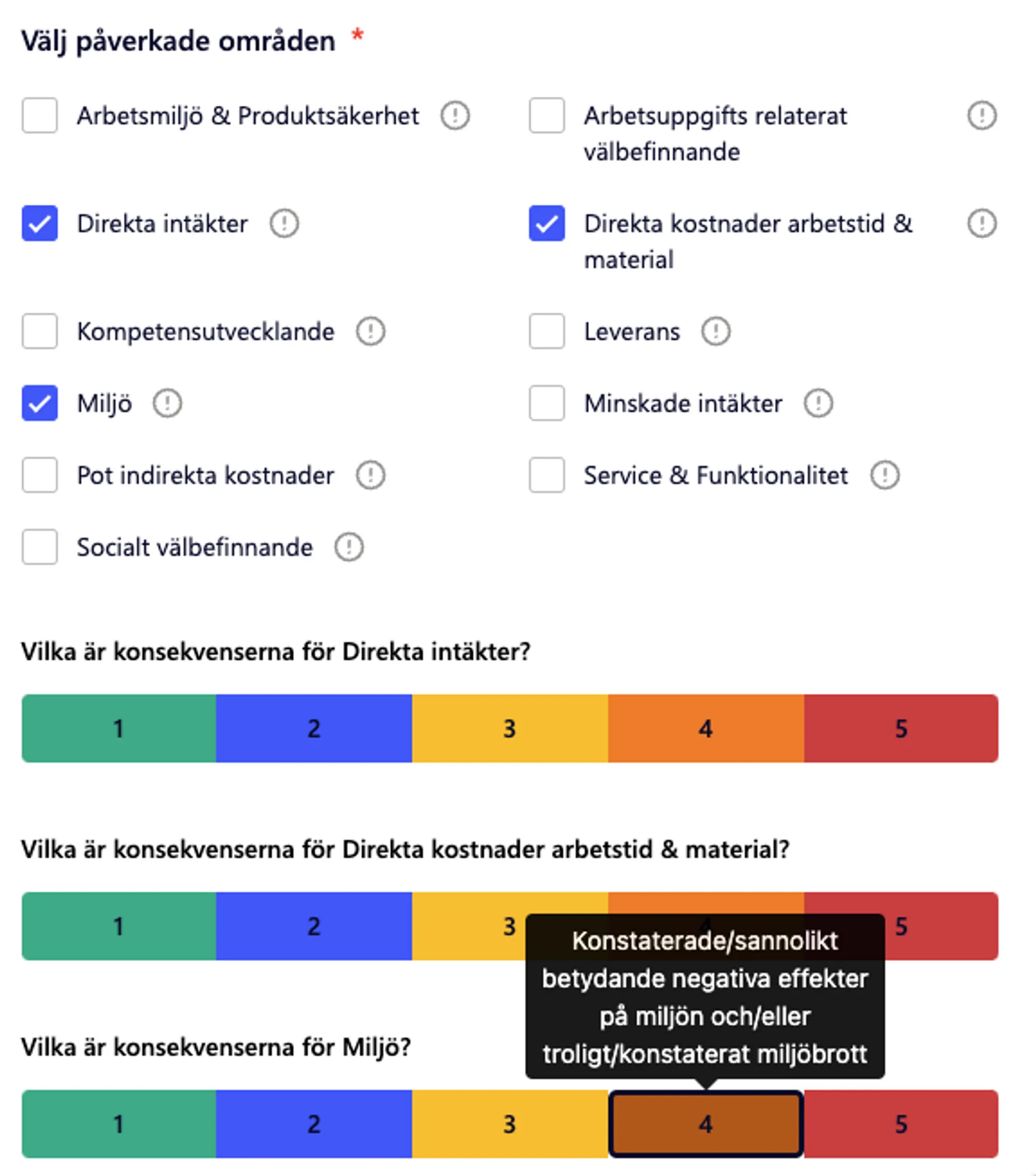
The type of matrix described here uses five levels to show the assessed impact. The definitions can cover quality, the environment, occupational health and safety, information security, or finances.
The person assessing a risk or deviation compares the available information with the definitions and selects the closest grade. Documented criteria make it easier to explain why two records received different impact grades and to review the assessment later.
The assessor combines the matrix criteria with evidence and professional judgement, then records why a particular grade was selected.
Five grades describe each impact area
In AmpliFlow, each impact area is assessed on a five-point scale: very low, low, moderate, high, and very high. Your organization defines what those levels mean for each area.
A high financial impact might be defined by a cost range, while a high environmental impact needs a different definition. Clear levels make the assessed impact comparable. Responsible people then weigh other decision criteria, such as likelihood, legal requirements, and time sensitivity, when prioritizing the work.
In AmpliFlow, the tool is called an impact matrix
AmpliFlow uses the same structure when you assess risks, deviations, improvement proposals, and goals. The tool is therefore called an impact matrix, and the individual assessments are called impact gradings.
A deviation can be graded by the harm it causes. An improvement proposal can instead be graded by the benefit it could provide. The impact matrix supports both assessments.
Start with a small set of clear criteria
- Choose the impact areas that affect your decisions.
- Write a concrete definition for every level from very low to very high.
- Ask two people to assess the same examples and compare their results.
- Revise definitions that the assessors interpret differently.
- Decide who may change the matrix and when it will be reviewed.
Want help creating an impact matrix for your organization? Contact us.